
IELTS Practice Test General: Your Ultimate Guide to Success
The IELTS General Training exam is a widely recognized English proficiency test designed for candidates who plan to work, train, or migrate to English-speaking countries. Preparing effectively for this exam is crucial, and one of the most effective ways to do so is by taking IELTS Practice Test General. This comprehensive guide covers everything you need to know about the General Training exam, the benefits of practice tests, and how to use them to maximize your score.
What Is the IELTS General Training Test?
The IELTS General Training test assesses your English language skills in real-life, practical contexts. It evaluates your ability to communicate in English for everyday social and workplace situations.
- IELTS Exam Registration
- IELTS Registration FAQs
- IELTS Exam
- Eligibility Criteria for IELTS Exam
- IELTS Eligibility FAQs
- IELTS Test Dates
- IELTS Exam Date FAQ
- IELTS Test Centres
Test Structure
The IELTS General Training test has four sections:
- Listening (30 minutes): Four recorded monologues and conversations.
- Reading (60 minutes): Three sections with texts from books, magazines, newspapers, notices, and advertisements.
- Writing (60 minutes): Two tasks; Task 1 is a letter writing task, and Task 2 is an essay.
- Speaking (11-14 minutes): A face-to-face interview with an examiner.
The Listening and Speaking sections are the same for both General Training and Academic versions, but the Reading and Writing sections differ.
Why Are IELTS Practice Tests Important?
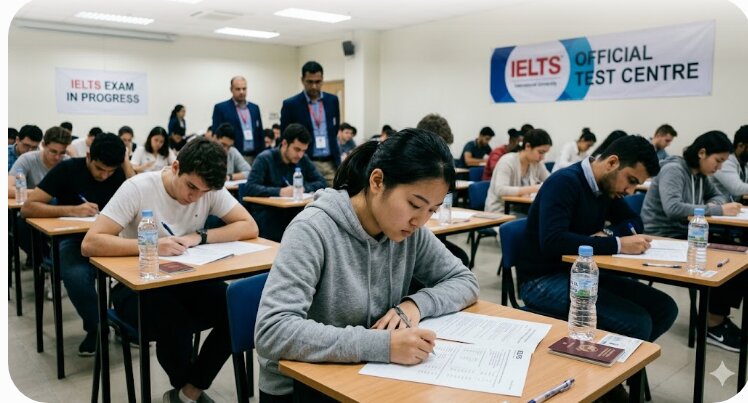
Taking IELTS practice tests mimics the actual exam environment and helps you:
- Familiarize yourself with the test format: Understanding the structure reduces anxiety and surprises on test day.
- Improve time management: Learning to pace yourself is crucial, especially in Reading and Writing.
- Identify strengths and weaknesses: Practice tests highlight areas needing improvement.
- Build confidence: Repeated practice reduces test-day stress.
- Enhance skills: Regular practice improves vocabulary, grammar, and comprehension.
How to Use IELTS Practice Test General Effectively
1. Simulate Real Test Conditions
- Time yourself strictly according to actual test limits.
- Find a quiet place free from distractions.
- Use the same materials as the real exam (e.g., headphones for Listening).
2. Review Your Answers Thoroughly
- Check correct answers and understand mistakes.
- Review explanations for Listening and Reading.
- Get feedback on Writing and Speaking from qualified tutors or online services.
3. Focus on Each Section Individually
- Practice Listening exercises daily to improve concentration and note-taking.
- Read a variety of English texts (newspapers, advertisements, manuals) to prepare for Reading.
- Write different types of letters and essays for Writing.
- Record yourself or practice with a partner for Speaking.
4. Use Official and Reliable Resources
- The British Council, IDP, and Cambridge IELTS series offer authentic practice materials.
- Online platforms and mobile apps provide additional practice tests and exercises.
Sample IELTS Practice Test General Sections Overview
Listening
- Four sections: a conversation between two people, a monologue, a conversation in an educational or training context, and a monologue on an academic subject.
- Questions include multiple choice, matching, plan/map/diagram labeling, form completion, and sentence completion.
Reading
- Section 1: Social survival texts (e.g., advertisements, timetables).
- Section 2: Workplace-related texts (e.g., job descriptions, contracts).
- Section 3: General interest text (e.g., newspaper articles).
Writing
- Task 1: Write a letter requesting information or explaining a situation.
- Task 2: Write an essay expressing an opinion, discussing a problem, or presenting an argument.
Speaking
- Part 1: Introduction and general questions.
- Part 2: Long turn where you speak on a given topic.
- Part 3: Discussion questions related to Part 2.
Tips for Improving Through Practice Tests
- Take notes on recurring question types and vocabulary.
- Practice paraphrasing questions and answers.
- Work on grammar accuracy and sentence variety in Writing.
- Enhance fluency by practicing speaking regularly on common topics.
- Analyze model answers and learn from them.
Common Challenges and How Practice Tests Help
| Challenge | How Practice Tests Help |
|---|---|
| Managing time pressure | Practice under timed conditions to improve speed. |
| Understanding accents | Listening to diverse recordings enhances comprehension. |
| Organizing essays effectively | Repeated Writing practice builds structure skills. |
| Speaking fluently and confidently | Simulated interviews reduce anxiety and improve fluidity. |
IELTS or TOEFL- Which one is better For USA
IELTS Indicator: All you need to know
IELTS vs TOEFL: Which Exam should you take
IELTS Practice Test With Answers
To prepare effectively, it is best to use official or highly reputable sources. These platforms provide the most accurate representation of the exam’s difficulty, format, and scoring criteria.
1. Official IELTS Sources (Highly Recommended)
These are the most reliable options because they are provided by the actual test organizers. They offer authentic materials that reflect the current exam standards.
- British Council – Take IELTS: Offers a comprehensive set of free practice tests for Listening, Reading, Writing, and Speaking. These include answer keys and explanations to help you understand your performance.
- IELTS IDP (Official Site): Provides free practice test PDFs for Academic and General Training, complete with sample answers. This is an excellent way to see what high-scoring answers look like in Writing and Speaking.
- IELTS Prepare Hub: Features full mock tests, familiarization tests for the computer-based version, and specific skill-based practice modules.
2. Third-Party Platforms (For Supplemental Practice)
If you have exhausted the official resources and need more variety, these platforms are widely trusted by the test-taking community:
- IELTS Online Tests (IOT): One of the most popular platforms for full-length mock exams. They offer an “IELTS Side by Side” feature that mimics the computer-delivered test interface, which is very helpful for familiarizing yourself with the actual exam day environment.
- AlfaIELTS: Focuses on AI-powered feedback. While they have free practice modules, their main value proposition is the ability to get instant feedback on your writing and speaking performances, which is useful if you don’t have a tutor.
Tips for Using Practice Tests Effectively
- Simulate Exam Conditions: Do not do the tests in pieces while distracted. Sit in a quiet room, set a timer, and complete the full section (or full test) in one go to build your mental stamina.
- Focus on the “Why”: When you get a question wrong, don’t just look at the correct answer. Use the “Locate and Explain” strategy—find why the correct answer is right and why your chosen answer was incorrect.
- Use Answer Keys for Analysis: Official practice tests include answer keys. Use these to identify your weak areas (e.g., if you consistently miss “True/False/Not Given” questions in Reading, dedicate specific time to that question type rather than just doing more full tests).
- Get Your Writing/Speaking Evaluated: While you can easily self-check Reading and Listening, Writing and Speaking are subjective. If possible, use official feedback services like IELTS Assist or find a qualified tutor to review your work.
Conclusion
ZUsing IELTS Practice Test General is an essential part of your preparation journey. It helps you gain familiarity, build confidence, and improve your skills across all four sections. Consistent practice with authentic materials, combined with thorough review and feedback, will significantly increase your chances of achieving your target band score.